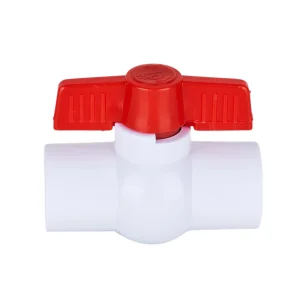
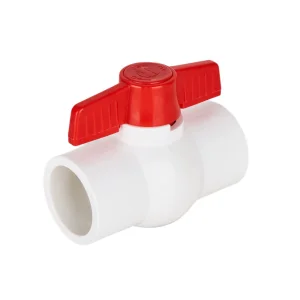
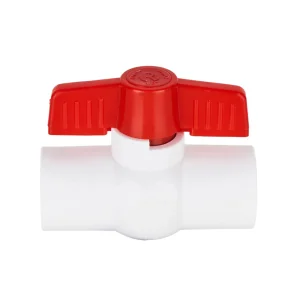
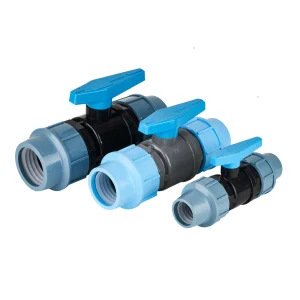
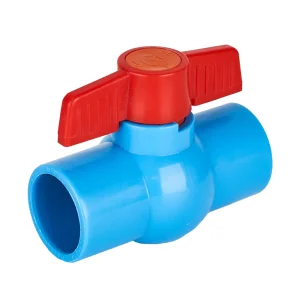
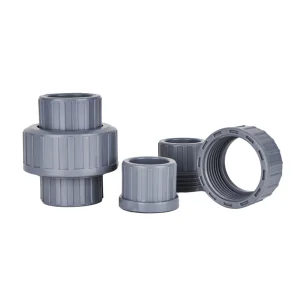
Explore our precision-manufactured fluid control and industrial components engineered to the world's most rigorous specifications.
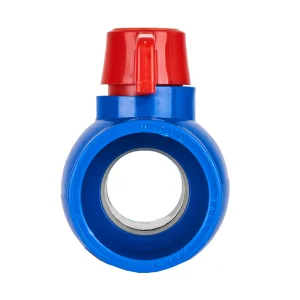
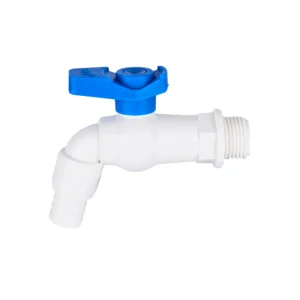
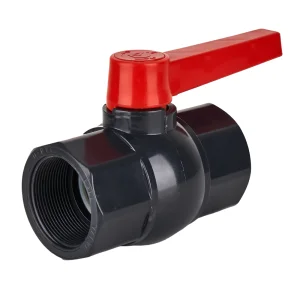
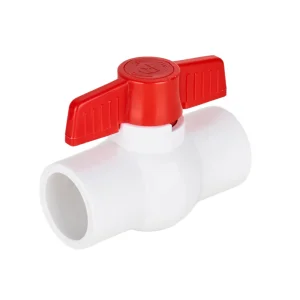
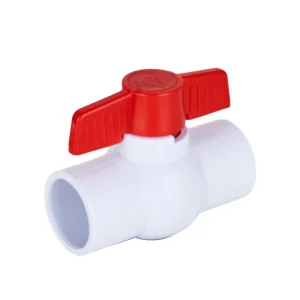
Connecting elite polymer processing with state-of-the-art Metal Injection Molding (MIM) engineering for global manufacturing leadership.
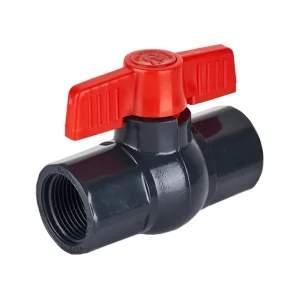
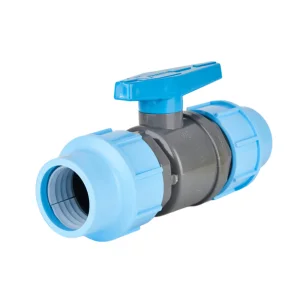
Ehao Plastic Group is a high-tech private enterprise integrating R&D and production of building materials, pipe fittings, and injection moulds. Ehao Plastic Group stands as a definitive leader in the PVC/UPVC ball valves domain in China's domestic and international markets. Since our inception, our technology platforms have been reinforced by the academic and technical backing of the Chinese Academy of Sciences and Zhejiang University. By introducing cutting-edge production lines and computerized automatic injection molding machinery imported from Germany, we ensure that every component is subjected to 26 steps of rigorous scientific testing, locking in a 100% ex-factory pass rate. The technical indexes of our products fully accord with DIN8077 and DIN8078 standards, aligning with world-class engineering criteria.
Leveraging our comprehensive brand influence, exceptional quality control matrices, and distinct international marketing strategies, our products have successfully penetrated major provinces and cities across China and 28 foreign countries and regions, including Europe, North America, and Southeast Asia. We continuously receive acclaim from global supply chain leaders and municipal procurement executives alike.
In addition to our polymer operations, we design and manufacture high-complexity plastic moulds, processing customer-supplied materials, samples, and architectural blueprints for customized extrusion and injection profiles. Concurrently, we develop custom solutions targeting the hybrid intersection of metal structural requirements and polymer sealing systems, especially utilizing Metal Injection Molding (MIM) Aluminum technology to create high-tolerance, lightweight, complex metal geometries integrated directly into fluid systems.
Continuous collaboration with leading research institutions ensures our materials engineering, binder formulations, and structural design simulations remain at the cutting edge of global standards.
Equipped with advanced German automated injection molding systems that guarantee absolute dimensional consistency across millions of units, reducing cycle time and deviation.
Every single metal and polymer component undergoes 26 discrete, scientific testing checkpoints. We monitor pressure resistance, chemical degradation, thermal stress, and micro-dimensional tolerances.
A comprehensive analysis of metallurgy, manufacturing advantages, and the industrial landscape of aluminum alloy micro-forming.
Metal Injection Molding (MIM) of Aluminum represents a massive leap forward in net-shape manufacturing for components that require both lightweight characteristics and high geometric complexity. Unlike steel or titanium alloys, aluminum has an extremely high affinity for oxygen and a relatively low melting point, making conventional sintering processes highly challenging. By utilizing ultra-fine aluminum alloy powder (such as Al-Si-Mg or 6000/7000 series equivalents) blended with specialized organic binder systems, advanced suppliers in China can inject this feedstock into mold cavities at high speeds.
After injection, the "green part" undergoes a critical chemical or thermal debinding process to extract the polymeric binder without disrupting the powder structure, forming a "brown part". This brown part is then sintered in controlled-atmosphere vacuum furnaces or nitrogen-purged environments close to the solidus temperature. The result is a metallurgical structure reaching 95% to 98% of the theoretical density of the raw aluminum alloy, exhibiting mechanical properties that rival forged or CNC-machined components.
While stainless steel MIM remains a staple for heavy-duty components, modern industries are demanding rapid heat dissipation, high electrical conductivity, and structural lightweighting. Aluminum alloys provide a density of approximately one-third of stainless steel, yet retain high specific strength. For applications such as wearable consumer electronics (smartwatches, internal frames), automotive sensor brackets, aerospace heat sinks, and pneumatic valve components, Aluminum MIM stands out as the optimal choice. It allows designers to consolidate multiple assembled parts into a single, complex monolithic component, reducing risk points and assembly labor.
Choosing a Chinese supplier for Aluminum MIM offers unprecedented efficiency and supply chain advantages. Chinese manufacturing hubs combine downstream feedstock compounding, mold-flow simulation engineering, precision EDM tooling, debinding/sintering infrastructure, and post-processing finishing (anodizing, sandblasting, plating) within a single ecosystem. This level of vertical integration decreases lead times from months to weeks. Furthermore, the convergence of high-capacity German injection equipment with domestic academic support allows for immediate technical adaptation, scaling from rapid prototypes to millions of parts per month with continuous SPC (Statistical Process Control).
Exploring how key industries deploy metal injection molded aluminum parts for enhanced mechanical performance.
Aluminum MIM components are extensively used in steering wheel hubs, localized engine mount sensors, ADAS radar camera brackets, and electronic control unit (ECU) enclosures. Sintered aluminum parts optimize heat dissipation while minimizing structural mass.
By marrying polymer and metal core capabilities, Ehao integrates Aluminum MIM internal valve rotors and actuators into high-performance industrial PVC/UPVC fluid systems. This guarantees structural torque resistance alongside total exterior chemical corrosion immunity.
Aluminum MIM allows the fabrication of ultra-thin, highly complex internal structural brackets, outer frames, hinges, and optical ports. It combines light weight, high mechanical strength, and excellent receptivity to premium anodizing finishes.
Integrating high-tech mold designs and manufacturing expertise across residential, commercial, and agricultural sectors.
Insights into technological shifts, green manufacturing integration, and global supply chain strategies.
The global metal injection molding industry is transitioning rapidly towards lightweighting, ecological sustainability, and process consolidation. Aluminum, being infinitely recyclable and naturally corrosion-resistant, is at the epicenter of these changes. Key technological advances include:
For modern procurement officers, choosing a supplier requires assessing not only unit costs but also complete design for manufacturability (DFM) support, material traceability, and quality certification profiles. Working with a Chinese manufacturer backed by academic alliances (such as Zhejiang University and the Chinese Academy of Sciences) ensures access to analytical testing labs equipped with scanning electron microscopy (SEM) for grain size verification, X-ray diffraction for phase composition checking, and non-destructive industrial CT scanning for internal void detection. This guarantees total compliance with international DIN, ASTM, and ISO quality frameworks.
Quick answers to essential technical and commercial queries regarding the sourcing, design, and applications of MIM Aluminum.
Normally, standard Aluminum Metal Injection Molding processes achieve structural dimensional tolerances of ±0.3% to ±0.5% of the nominal dimension. For critical dimensional details, post-sintering sizing or CNC touch-ups can refine specific features to tolerances down to ±0.01mm.
Aluminum die casting is typically suited for larger, less complex parts and can suffer from interior air entrapment, resulting in lower structural strength. MIM Aluminum, utilizing fine spherical powders, results in a near-poreless homogeneous microstructure with superior mechanical properties, allowing for ultra-thin wall sections and extremely intricate geometry that cannot be extracted from a die-cast mold.
We primarily operate with 6000-series (for good thermal conductivity, corrosion resistance, and post-machining capability) and 7000-series (high strength-to-weight ratio) equivalent powders, alongside specialized Al-Si-Mg alloys developed for optimum flowability during the green injection stage.
Initial mold tooling costs can be higher compared to sand casting or CNC prototyping. However, because MIM molds can yield millions of pieces over their lifespan with negligible unit costs, the tooling investment is quickly amortized. For production volumes exceeding 10,000 units annually, MIM is highly cost-effective.
Leveraging our polymer injection capabilities and high-precision mold fabrication workshops, we specialize in multi-material co-molding and assembly. We embed sintered Aluminum MIM core structural elements inside high-strength PVC, UPVC, or PP exterior housings, creating composite assemblies that exhibit metallic structural integrity combined with polymer corrosion resistance.
Our polymer fluid systems and injection products are tested to DIN8077 and DIN8078 standards. For metal components and MIM alloys, we align with MPIF Standard 35 (Materials Standards for Metal Injection Molded Parts) and standard ISO 9001:2015 protocols, backed by a strict 26-step verification process.
Premium quality direct from our ISO-certified manufacturing facilities in China, supporting global distribution network.
 EHAO
EHAO