China is a major sourcing base for PVC piping components, but manufacturer capabilities vary. For global buyers, choosing a Ball Valve Pvc supplier takes more than comparing prices. Resin quality, dimensional consistency, sealing performance, and clear pressure and temperature ratings all matter. A valve that looks suitable on a product page may not fit a specific water-treatment line or irrigation system.
This guide introduces manufacturers serving international markets and explains what buyers can check before requesting a quotation. Look for product drawings, material specifications, inspection records, and practical details such as socket dimensions and handle clearance. Ask how the supplier tests valve bodies and seals, and whether batch records are available. These details help reduce avoidable surprises.
Details matter.
A factory’s export experience can be useful, but it does not replace a review of the actual product and supporting documents. Buyers should confirm applicable requirements for their destination and intended use, since standards and project specifications differ. Samples can help assess fit and operation. They cannot prove long-term performance by themselves. That takes care.
The manufacturers discussed here should be evaluated on evidence, not broad claims. Compare their product range, production controls, communication, customization options, and after-sales support. Some information may be difficult to verify from a public catalogue alone. Ask direct questions, and keep the answers on record. A careful comparison gives procurement teams a clearer basis for selecting a reliable PVC ball valve partner.
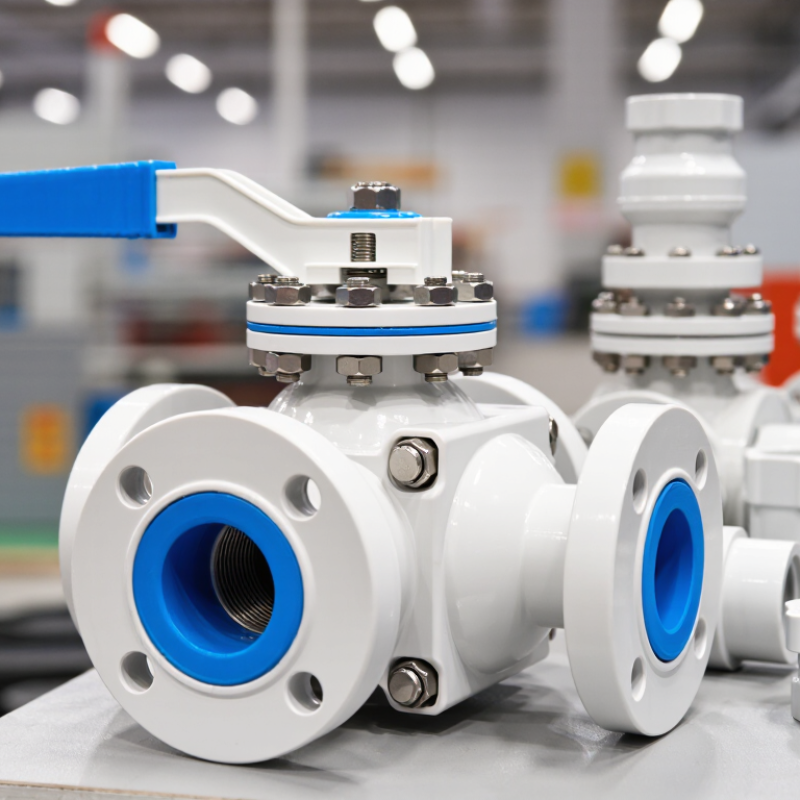
PVC ball valves use a rotating sphere with a drilled passage to start or stop flow. A quarter-turn handle. When open, the passage aligns with the pipe; when closed, the ball seals against internal seats. This simple design supports quick operation and makes the valve easy to inspect. However, seat wear or trapped debris can affect shutoff over time.
Valve bodies are commonly made from PVC-U or CPVC. PVC-U is used in many water systems, while CPVC can suit some higher-temperature services. Neither material works with every fluid. Seal materials, such as EPDM or FKM, also need checking against the media and operating conditions. Ratings depend on valve size, temperature, pressure, and connection type. A rating printed on a product sheet is not a universal promise.
Typical applications include irrigation lines, swimming pools, water treatment, and chemical dosing systems. On a dosing line, for example, a compact valve can isolate equipment during maintenance. Yet “chemical resistant” is too broad to guide a purchase. Buyers should verify fluid compatibility, temperature limits, and pressure derating with technical documentation. Connection styles also matter: solvent-weld, threaded, and flanged ends may not suit the same installation. Small details, like handle clearance beside a wall, are easy to overlook.
Approximate upper continuous service temperatures for common thermoplastics used in valve construction.
Typical reference values: PVC-U 60°C, CPVC 90°C, polypropylene 80°C, and PVDF 140°C. Actual limits depend on the valve design, pressure, fluid, and manufacturer’s specifications; pressure ratings generally decrease as temperature rises.
China’s PVC ball valve manufacturing landscape combines resin processing, injection molding, machining, assembly, and testing. Many factories can produce compact socket, threaded, or flanged designs for water handling and general industrial systems. The visible product may look simple. Its reliability depends on less visible details: resin consistency, wall thickness, ball finish, and seal fit.
Manufacturers often source components and materials through regional supply networks, which can support flexible lead times. Yet capacity and quality controls vary. Buyers should ask how each production batch is inspected, whether pressure tests are documented, and how dimensions are checked against drawings. A datasheet alone is not enough. Request material details and confirm that the valve suits the working pressure, temperature, and fluid. PVC performance can change with operating conditions, so compatibility should be assessed for the actual system. Details matter.
Factory audits and sample testing can reveal gaps that polished catalogs may not show. Look closely at molded surfaces, handle movement, and leakage results after repeated operation. Some suppliers may prioritize fast customization, but small design changes can affect consistency between batches. China’s manufacturing base is broad and capable, though not uniform; careful verification remains part of sourcing.
Evaluating a Chinese PVC ball valve manufacturer requires more than comparing unit prices. Start with the valve’s intended service: fluid type, operating temperature, pressure, pipe connection, and opening frequency. Ask for material specifications for the body, ball, and seals. PVC grades and seal materials can affect chemical compatibility and service life.
Check how production quality is verified. Request inspection records, pressure-test procedures, and clear acceptance criteria for leakage and operation. A test report should identify the product model and test conditions, not just show a pass mark. Review relevant certificates, and confirm their scope and issuing organization independently. Small details matter.
Consistency deserves close attention. Compare samples with drawings, dimensions, and stated tolerances; a smooth handle does not prove dependable internal parts. Ask how batches are traced and how rejected components are handled. Manufacturing capacity is useful, but stable process control matters more than an impressive monthly figure. Communication is another practical test: Can the supplier answer technical questions directly and provide revised documents when specifications change? I would not treat a delayed reply as automatic proof of poor quality, but repeated vague answers are worth investigating. Even careful reviews have limits, so buyers should define acceptance checks before placing a large order.
China’s notable PVC ball valve manufacturers serve irrigation, water treatment, aquaculture, and light industrial markets. Some focus on compact threaded valves, while others produce larger flanged models for fixed pipe systems. Useful suppliers provide clear drawings, material details, and pressure ratings—not just polished catalog photos. Ask whether the body, ball, and seals suit the intended fluid and operating temperature. Small details matter. A handle that turns smoothly on a sample may behave differently after months of frequent cycling.
For global buyers, compare manufacturers by process control as well as product range. Request dimensional tolerances, inspection records, and details about pressure testing. Check how the valve connects to your pipework; socket, threaded, and flange standards are not interchangeable by assumption. A factory’s stated capacity can be helpful, but it does not prove consistent quality across every batch. Ask for recent production samples and clarify how defects are handled. Even careful checks leave some uncertainty, especially when specifications are vague. That is worth acknowledging before placing a large order.
| Buyer Evaluation Dimension | Common Product or Market Benchmark | What Global Buyers Should Verify |
|---|---|---|
| Valve material | PVC-U (unplasticized PVC) is commonly used for water-treatment, irrigation, and chemical-handling systems where the fluid is compatible with the material. | Request the material specification for the body, ball, stem, seats, and seals. Confirm chemical compatibility for the actual fluid, concentration, and operating temperature. |
| Valve design | Common options include compact one-piece valves and union-end designs that allow the valve body to be removed for maintenance. | Check whether the design permits seat adjustment or replacement, and confirm the supplied valve’s maintenance procedure and spare-parts availability. |
| Connection type | Common PVC valve connections include solvent-weld socket, threaded, and flanged ends. Availability and dimensions vary by product range. | Confirm the connection standard, dimensions, and mating-pipe requirements. Do not assume that similar-looking connections are interchangeable. |
| Nominal size | Product ranges vary by supplier and design; buyers commonly compare valves by DN or nominal pipe size. | Check the manufacturer’s dimension drawing, bore size, end-to-end length, and compatibility with the required piping system. |
| Pressure rating | Published ratings may be stated as PN or in another pressure-rating format. Allowable working pressure can depend on valve size, temperature, and design. | Request the pressure-versus-temperature data and confirm the rating applies to the complete valve, not only to the pipe or fittings. |
| Operating temperature | PVC-U valves are generally intended for relatively low-temperature service; the allowable range depends on the specific product and application. | Obtain the product datasheet and check both continuous and short-term temperature limits, including the effect of temperature on pressure rating. |
| Pressure and leakage testing | Industrial thermoplastic valves can be evaluated using applicable valve test methods, including ISO 9393-2 where relevant to the product and test scope. | Ask for test procedures and traceable test records. Confirm the test standard, sample selection, acceptance criteria, and whether testing covers every valve or only samples. |
| Manufacturing quality system | A quality-management certificate may provide information about a supplier’s documented management system; it does not by itself certify every valve model. | Verify certificate scope, issuing body, validity, and facility address. Request product-specific inspection records and material traceability where required. |
| Documentation for export | Typical buyer documentation may include product datasheets, dimensional drawings, installation instructions, and inspection or test reports. | Agree in advance on document language, labeling, packaging, order inspection, and any destination-market requirements. |
| Note: This is a supplier-evaluation guide, not a ranking or a representation of any individual manufacturer’s specifications. Confirm all ratings, standards, dimensions, and application limits against the selected product’s current technical documents. | ||
For global buyers, export readiness starts with matching the valve to its destination and use. Ask which product standards, pressure ratings, and material requirements apply in your market. Request current test reports and confirm that the model, size, and material shown match your order. A certificate alone is not proof. Check its issuing body, validity, and scope.
Review the supplier’s quality-system certificate, but distinguish it from product approval. Request batch traceability, dimensional inspection records, and pressure-test results for the PVC ball valves you plan to buy. If the valves will carry drinking water, ask for documentation relevant to that specific application. Details matter. Verify that commercial invoices, packing lists, and product labels use consistent descriptions and quantities. Small mismatches can slow customs clearance.
Supplier checks should include more than email. Arrange a live factory walk-through or an independent inspection, and compare a production sample with the approved specification. Check socket dimensions, handle movement, and visible surface defects. Keep records. This step is easy to rush, especially when a shipment date is close. A checklist helps, but it cannot replace clear answers about test methods, corrective actions, and who will resolve a failed inspection.
A quarter-turn handle rotates a drilled sphere. The passage lines up with the pipe when open. Turn it across the pipe to stop flow.
PVC-U is common in water systems. CPVC can suit some higher-temperature services. Check the valve’s stated limits before choosing either material.
No. Compatibility depends on the fluid, seals, temperature, and pressure. Check technical documentation for the exact conditions. “Chemical resistant” alone is not enough.
They appear in irrigation, pools, water treatment, aquaculture, and dosing systems. A compact valve can isolate equipment during maintenance.
Treat it as specific to the valve’s size, temperature, pressure, and connection type. It is not a universal promise.
Common options include solvent-weld, threaded, and flanged ends. They are not interchangeable by assumption. Check your pipe standard.
Request drawings, material details, pressure ratings, dimensional tolerances, and inspection records. Ask about pressure testing and how defects are handled.
Check handle clearance near walls and confirm the seals suit the fluid. A sample may turn smoothly, but frequent use can change performance. Some uncertainty remains.
This guide introduces Ball Valve Pvc design, material choices, and common uses in water distribution, irrigation, and other systems where corrosion resistance and dependable flow control matter. It also outlines China’s PVC ball valve manufacturing landscape, from production capabilities to the range of products available to international buyers.
To compare suppliers, buyers can assess product quality, manufacturing experience, technical support, communication, and consistency of documentation. The guide also explains how to review relevant export standards, request product specifications and test records, and verify a supplier before placing an order. These practical considerations can help global buyers make informed comparisons and select a manufacturer suited to their application and delivery requirements.

EHAO