Choosing the right Pp Ball Valves can influence leakage control, maintenance costs, and service life across international projects. Global buyers often compare valve types by material, connection method, pressure rating, and operating temperature. Yet these details can look similar on a supplier’s product page.
This guide examines ten practical types used in water treatment, chemical processing, irrigation, aquaculture, and industrial piping. It considers compact true-union designs, flanged models, threaded valves, pneumatic options, and other configurations. Each type serves a different installation condition. A valve for a clean-water skid may fail quickly in an aggressive chemical line if the material compatibility is overlooked.
Small details matter.
Experienced engineers usually check body construction, seal material, flow direction, torque requirements, and replacement access before placing an order. Reliable manufacturers should provide dimensional drawings, pressure data, batch information, and clear testing procedures. Independent inspection can add confidence, especially when shipments cross borders and local support is limited.
However, no selection guide can replace application-specific evaluation. Some product descriptions remain incomplete. Even experienced buyers can focus too heavily on price or delivery speed. That is a weakness worth recognizing. Actual fluid concentration, temperature changes, pipe alignment, and installation quality may alter performance.
The following overview helps procurement teams compare Pp Ball Valves with greater clarity. It also highlights practical questions to ask suppliers before approval. Better decisions come from verified specifications, documented experience, and careful communication between designers, buyers, and installers.
PP Ball Valve Basics: Materials, Standards, and Operating Principles
PP ball valves use a quarter-turn design for quick isolation. Their bodies commonly use PP-H, PP-R, or reinforced polypropylene. PP-H offers strong chemical resistance. PP-R is more common in hot-water systems. The correct choice depends on fluid, temperature, pressure, and connection method. PlasticsEurope reported 413.8 million tonnes of global plastics production in 2023. This scale supports polypropylene’s continuing role in industrial piping, but it does not make every PP valve suitable for every service.
ISO 16135 covers thermoplastic ball valves and defines key requirements for design, testing, and performance. Inside the valve, a drilled ball rotates 90 degrees around a stem. The bore aligns with the pipe when open. It turns across the flow when closed. PTFE or elastomer seats create the seal, while the stem transfers handle movement. Pressure ratings usually fall as temperature rises. That detail is often missed. A valve may look oversized, yet its seal material may be the real limitation. Field inspection should check torque, seat wear, thread condition, and visible stress near socket joints. Standards guide selection, but installation quality still decides reliability.
Tips: Confirm chemical compatibility using the fluid’s concentration and operating temperature. Check ISO 16135 documentation and pressure-test records. Leave room for thermal expansion. My practical view is cautious: “universal” valve claims deserve a second look.
The Top 10 PP Ball Valve Types and Their Distinctive Features
PP ball valves serve corrosive-water, chemical, aquaculture, and irrigation systems. PlasticsEurope reported global plastics production of 400.3 million tonnes in 2022, showing the scale behind thermoplastic infrastructure. However, material volume does not guarantee correct valve selection.
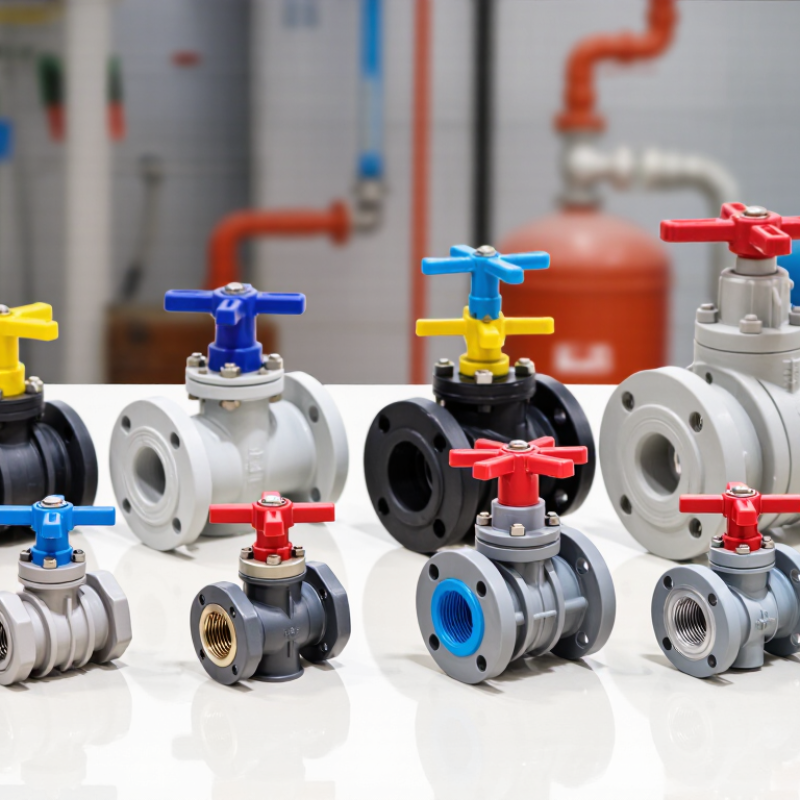
The main PP ball valve types include true-union, single-union, threaded, socket-fusion, flanged, three-way, full-port, reduced-port, electric-actuated, and pneumatic-actuated designs. True-union valves allow easy removal from compact pipework. Single-union models reduce installation cost. Threaded versions suit smaller lines and temporary layouts. Socket-fusion valves create smooth, solvent-free joints through heat. Flanged types support larger pipelines and frequent maintenance. Three-way valves redirect flow between tanks or process branches. Full-port bodies minimize pressure loss. Reduced-port bodies are lighter and often less expensive. Electric actuation supports precise remote control. Pneumatic actuation responds quickly in automated plants.
The industrial-valve market continues expanding with water-treatment and process-equipment investment, according to recent market research reports from Grand View Research. Yet their broad market figures rarely isolate PP ball valves, so buyers should avoid exaggerated forecasts. In field inspections, union nuts, seats, stem seals, and fusion alignment deserve equal attention. Small misalignment can cause leakage later. That detail is easy to miss. Temperature, pressure, media concentration, and cycling frequency must guide the final choice. No single type wins everywhere. That is the uncomfortable part.
How to Compare PP Ball Valves by Design, Pressure, and Application
Global buyers often compare PP ball valves by structure before checking the service conditions. That order can create costly mistakes. One-piece valves suit compact, low-maintenance lines, while two-piece designs allow easier servicing. Three-piece bodies provide better access for cleaning and seal replacement. True-union valves help maintenance teams remove the valve without cutting pipe. Threaded, socket-weld, flanged, and fusion-connected ends match different installation methods. Compact, reduced-port, and full-port versions complete the common ten-type comparison.
Pressure performance depends on more than the printed rating. Check the valve’s pressure-temperature chart, wall thickness, seat material, and connection strength. Polypropylene can handle many corrosive fluids, but heat can reduce its working pressure significantly. A valve rated for cold water may perform differently at 60°C. Do not compare figures from separate test standards without checking their conditions. That shortcut is common. It is also unreliable.
Application should guide the final choice. Full-port valves reduce flow resistance in transfer pipelines, while reduced-port models may fit tighter layouts and lower budgets. Chemical dosing systems need compatible seals, accurate shutoff, and resistance to repeated cycling. Irrigation lines may prioritize low weight and quick union removal. For automated systems, confirm actuator torque, stem geometry, and fail-position requirements. Inspectors should also verify batch markings, pressure-test records, and installation instructions. In practice, installers sometimes overtighten plastic connections, causing hidden stress. I would treat that risk seriously, even when the valve appears robust.
Global Buyer Guide to Sizes, Connections, Certifications, and Compatibility
Global buyers compare ten common PP ball valve forms: compact, true-union, single-union, flanged, threaded, socket-fusion, spigot-fusion, wafer, three-way, and actuated models. Each serves a different installation need. Compact valves suit tight spaces, while true-union designs simplify maintenance. Three-way valves support diversion or mixing, but their flow paths require careful review.
Size selection should match pipe outside diameter, pressure class, and operating temperature. Common sizes range from DN15 to DN100, although larger systems exist. Connections may follow metric fusion standards or inch-based systems. Threaded ends can use BSP or NPT, and these threads are not interchangeable. Measure the pipe, not only the valve label. That mistake is still common.
Certification depends on the destination and service. Potable-water projects may require NSF/ANSI 61, WRAS, ACS, or an equivalent local approval. Industrial valves may need evidence aligned with ISO 16135, pressure testing, and material traceability. Verify the certificate’s scope, not just its logo. Compatibility checks should include chemicals, concentration, temperature, pressure, and seal material. PP handles many corrosive fluids, but not every solvent or high-temperature process. EPDM and FKM seals also behave differently. A valve can fit perfectly and still fail early. Review the manufacturer’s chemical chart, test conditions, and installation instructions before purchasing.
Top 10 Types of PP Ball Valves for Global Buyers
Typical nominal diameter ranges by valve type and connection design
The chart compares commonly available PP ball valve configurations used in industrial piping, water treatment, chemical handling, and laboratory systems. Ranges are indicative industry values and may vary according to pressure rating, connection standard, temperature, and manufacturer specification.
Selection Checklist for Sourcing the Right PP Ball Valve Worldwide
For global buyers, selecting the right PP ball valve starts with the application, not the catalogue. PlasticsEurope’s Plastics—The Fast Facts 2023 reports 400.3 million tonnes of global plastics production in 2022. That scale supports broad availability, but it does not guarantee suitable valve quality. Define the valve type carefully: one-piece, two-piece, three-piece, flanged, threaded, socket-welded, true-union, compact, manual, or actuated.
Build a practical checklist. Confirm media compatibility, operating temperature, pressure, pipe size, and flow direction. Check whether the body, ball, seats, and seals use appropriate materials.
ISO 16135 covers thermoplastic ball valves for industrial applications, while ISO 9393-2 addresses pressure testing. Request test records, batch traceability, dimensional drawings, and leakage results.
A valve rated for water may fail in an oxidizing chemical service. Small details matter.
Review connection standards and actuator requirements before placing an order. Verify torque at the lowest and highest operating temperatures. Ask for packaging suitable for long-distance transport and humid storage.
The OECD’s Global Plastics Outlook projects plastic waste could nearly triple by 2060, so buyers should also examine service life, repairability, and material recycling options.
A spreadsheet can still mislead. I would recheck pressure ratings after every change in temperature, seal material, or fitting standard. Procurement teams often overlook spare seats and compatible replacement parts. That mistake becomes expensive offshore.
FAQS
It is a polypropylene valve using a quarter-turn handle. A drilled ball rotates 90 degrees inside the body. The bore aligns with the pipe when open. It crosses the flow when closed. Simple and quick.
PP-H usually provides strong chemical resistance. PP-R is more common in hot-water systems. Selection depends on the fluid, temperature, pressure, and connection method. The same plastic does not suit every service.
Working pressure usually decreases as temperature rises. A valve suitable for cold water may perform differently at 60°C. Check the pressure-temperature chart carefully. Heat changes everything.
One-piece valves are compact and require little maintenance. Two-piece valves allow easier servicing. Three-piece valves provide better access for cleaning and seal replacement. True-union designs allow removal without cutting the pipe. Choose based on maintenance needs.
Threaded, socket-welded, flanged, and fusion-connected ends suit different installations. The pipe standard must match the valve connection. Overtightening plastic threads can create hidden stress. The damage may appear later.
Confirm the fluid, concentration, operating temperature, pressure, pipe size, and flow direction. Check the body, ball, seats, and seals. Request pressure-test records, dimensional drawings, and leakage results. Batch traceability is also useful. Small details matter.
Full-port valves reduce flow resistance in transfer pipelines. Reduced-port valves may suit compact layouts and lower budgets. The choice depends on flow requirements and available space. Cheaper is not automatically better.
Confirm actuator torque, stem geometry, and required fail position. Check torque at both low and high operating temperatures. Repeated cycling can increase seat wear. I would recheck the figures after temperature changes. A catalogue can mislead.
Leave space for thermal expansion. Inspect torque, seat wear, threads, and stress near socket joints. Review installation instructions before tightening connections. Keep spare seats and compatible replacement parts available. That precaution saves downtime.
Conclusion
This guide explains the fundamentals of Pp Ball Valves, including their polypropylene construction, operating principles, pressure characteristics, and the standards commonly considered in international purchasing. It introduces ten major valve types, such as threaded, socket-weld, flanged, union, compact, true-union, three-way, diaphragm-integrated, actuated, and specialty chemical-service designs, highlighting how their structures affect installation, maintenance, flow control, and service life.
Global buyers will also learn how to compare valves by size, connection method, pressure rating, temperature range, media compatibility, and application requirements. The guide covers practical considerations for selecting suitable certifications, testing documents, packaging, and technical support when sourcing across different markets. A concise checklist helps purchasers verify material quality, sealing performance, dimensional compatibility, operating method, spare-part availability, and supplier consistency before placing an order.

 EHAO
EHAO