Choosing reliable Pvc Ball Valve Manufacturers in 2026 requires more than comparing prices or browsing attractive websites. A valve may look identical to another, yet its PVC resin, sealing design, pressure rating, and molding accuracy can differ significantly. Buyers should examine technical data sheets, sample valves, production controls, and batch traceability. Small details matter. A rough thread can create expensive delays.
W. Edwards Deming, a respected manufacturing-quality authority, said, “Quality comes not from inspection, but from improvement of the production process.” This principle remains valuable when evaluating Pvc Ball Valve Manufacturers. Ask how suppliers control wall thickness, socket dimensions, torque, and leakage performance during production. Request test records rather than accepting broad promises. Confirm whether the manufacturer follows suitable industry standards and provides clear material documentation. Certifications help, but they do not replace independent judgment.
A factory audit can reveal practical facts. Look for organized storage, calibrated testing equipment, trained technicians, and consistent labeling. Also review response times, replacement policies, tooling capability, and export experience. A low quotation may hide weak molds, unstable supply, or limited after-sales support. That possibility deserves attention. Even experienced buyers can overlook it. Do not choose a supplier from one successful sample alone; evaluate repeatability across several batches. The best partner combines dependable engineering, transparent communication, realistic lead times, and verified performance. Still, no selection process is perfect. Recheck assumptions before signing a long-term agreement.
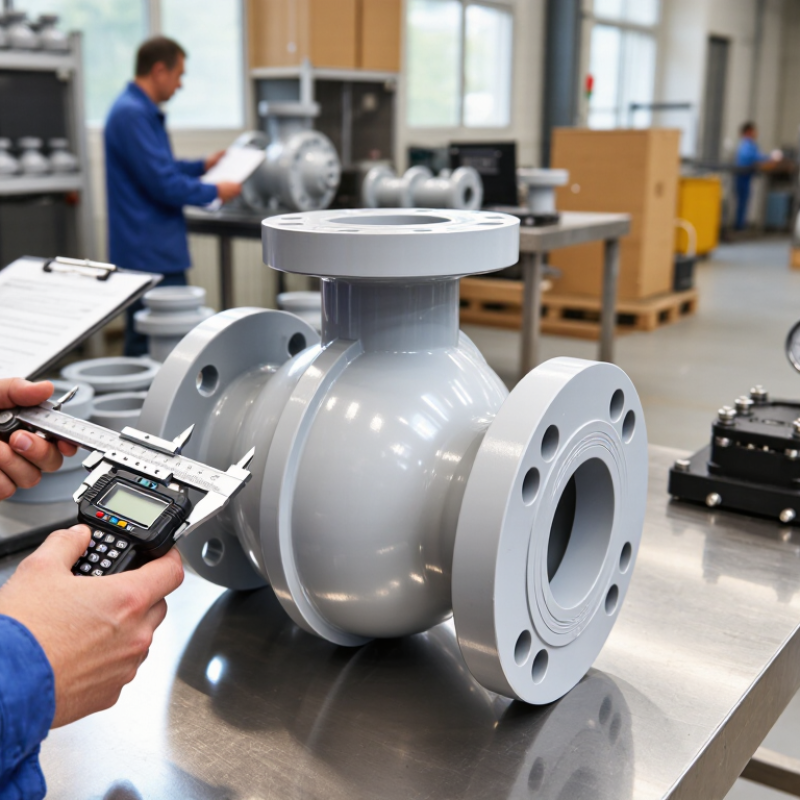
Before comparing PVC ball valve manufacturers, define the job the valve must perform. Record the fluid, concentration, temperature range, pressure, flow rate, and operating frequency. A valve carrying cold irrigation water faces different demands than one handling acidic process liquid. Include solids, suspended particles, and exposure to sunlight. Small details matter. For example, a 50 mm line may need full-port flow, while a throttling point may require a different valve design. Do not assume PVC suits every chemical; compatibility tables need confirmation at actual temperature and concentration.
Specify the connection type, end dimensions, sealing material, actuation method, and expected service life. Ask for pressure-temperature curves, dimensional drawings, material certificates, and test procedures. Reliable manufacturers should explain how each claim was verified, not merely provide a catalog number. Request samples or a controlled trial when failure could interrupt production. Check whether the valve is intended for isolation, frequent cycling, or temporary adjustment. Ball valves often perform best as on-off devices. Using one for continuous throttling can cause premature wear.
A practical review should include installation space, maintenance access, spare-part availability, and operator skill. I have seen projects specify maximum pressure but overlook vacuum conditions after pump shutdown. That omission can distort the selection. A clear requirement sheet also exposes uncertainty. Mark unknown values instead of inventing them. Then ask manufacturers to respond with test data, operating limits, and written recommendations. The lowest quotation may not represent the lowest long-term cost. Look for evidence that connects the valve design to your actual operating conditions.
Define your PVC ball valve application and performance requirements first. Common nominal pressure classes for PVC piping systems are PN6, PN10, and PN16, corresponding to nominal pressures of 6, 10, and 16 bar at the applicable reference temperature.
Before comparing manufacturers, confirm the required pressure class, operating temperature, chemical compatibility, connection standard, valve size, flow rate, sealing material, and actuation method. PVC-U service temperature is commonly limited to approximately 60°C, and pressure ratings may decrease as temperature increases. Always verify the valve-specific pressure-temperature rating and applicable standard.
A reliable PVC ball valve manufacturer should prove quality with records, not promises. The ISO Survey 2022 reported about 1.27 million ISO 9001 certificates worldwide. Certification matters, but its scope matters more. Check whether it covers valve design, molding, assembly, and testing. Request the certificate number, issuing body, and latest audit date. A certificate can look reassuring. It does not prove every batch.
Material control deserves close inspection. Ask for resin specifications, batch numbers, and test reports for pressure, impact, and chemical resistance. ASTM D1784 classifications can help verify PVC compound performance. For potable-water applications, check relevant health-effect certifications, such as NSF/ANSI/CAN 61. Do not accept a generic “food grade” statement. It is too vague. Inspect valve bodies for uneven color, sink marks, flash, and rough threads. Small defects often reveal weak molding control.
Production standards should include documented sampling plans and final pressure testing. ISO 2859-1 provides a recognized framework for acceptance sampling, while ISO 9001 supports process consistency. Ask how the factory isolates failed valves. Review calibration records for pressure gauges and torque tools.
Traceability should connect one finished valve to its raw material batch and operator record. Some suppliers may resist sharing this evidence. That hesitation deserves attention. Price comparisons are useful, but a cheaper valve may carry higher replacement risk. I would also request samples from separate production dates, because one perfect sample proves very little.
How to Choose PVC Ball Valve Manufacturers in 2026?
Choosing a PVC ball valve manufacturer requires more than comparing prices. Start by examining valve design, material quality, and application suitability. Full-port valves support higher flow with less pressure loss. Reduced-port designs may lower costs but restrict flow. True-union models simplify maintenance in tight spaces. Check pressure ratings, temperature limits, sealing materials, and connection standards before approval.
Customization should be practical, not decorative. Reliable manufacturers can adjust handle colors, valve sizes, end connections, seals, packaging, and actuator compatibility. Ask for technical drawings and sample units. I have found that small dimensional differences can delay installation. That lesson is easy to underestimate. The manufacturer should also explain testing methods, including pressure testing, leakage checks, and material verification. Clear batch records improve traceability when problems appear months later.
Tips: Request a written specification before discussing volume. Test samples under your actual pressure and temperature conditions. Confirm spare-part availability and expected service life. Evaluate technical support by asking detailed questions, not general promises. Helpful engineers should provide installation guidance, troubleshooting steps, and quick feedback on drawings. Response time matters during commissioning. Still, support quality can vary between sales staff and engineers, so request direct technical contact. Do not rely only on certificates; compare test evidence, communication, and manufacturing consistency.
Choosing a PVC ball valve manufacturer in 2026 requires more than comparing unit prices. Grand View Research reported that the global PVC market reached about USD 45.6 billion in 2023. Resin costs can therefore move quickly. Request a quote with resin grade, pressure class, seal material, testing, packaging, and freight listed separately. A low price may hide expensive inspection or replacement risks.
Lead time must be divided into production, testing, and transport. Ask for the shortest realistic schedule, not an optimistic promise. UNCTAD’s 2024 Review of Maritime Transport notes that shipping carries over 80% of global merchandise trade by volume. Port congestion or route disruption can affect delivery dates. Ask for recent on-time delivery records, capacity during peak months, and a written escalation process. Three delivery references are useful. One spreadsheet is not enough.
Minimum order quantities also need practical testing. Request sample valves before accepting a large batch, then compare pricing at several volume levels. A flexible manufacturer may support pilot orders, mixed sizes, or quarterly releases. Supply reliability depends on more than production capacity. Check resin traceability, backup tooling, quality-control records, and the availability of critical seals. An annual supply agreement can help, but it should not replace factory audits. I would also question claims of “zero delays”; they sound impressive, yet real supply chains rarely behave perfectly.
How to Choose PVC Ball Valve Manufacturers in 2026?
A dependable PVC ball valve manufacturer should show more than polished brochures. In field sourcing, I examine project references, production records, and complaint patterns. Ask how long similar valves have served in water treatment, irrigation, or chemical handling systems. Independent reviews help, but vague praise proves little. Request contactable references and recent quality reports. A manufacturer that answers difficult questions usually deserves closer attention.
Testing processes reveal whether reliability is real. Confirm that each batch receives dimensional checks, pressure testing, torque testing, and leak inspection. Ask for test standards, equipment calibration dates, and sample reports. Watch the factory, if possible. Look for clean assembly areas, traceable materials, and clearly separated nonconforming products. A perfect inspection visit can still miss hidden weaknesses.
Read warranty terms line by line. Check coverage period, excluded failures, replacement procedures, and response deadlines. A useful warranty describes evidence requirements without creating unreasonable barriers. After-sales service matters when a valve sticks during a shutdown. Confirm technical support hours, spare-part availability, and escalation contacts. Test their response before placing a large order. I once accepted a reassuring promise without checking response time. That mistake delayed maintenance. Reliability needs proof, not confidence alone.
| Assessment Dimension | Practical 2026 Benchmark | What to Verify | Recommended Evidence | Suggested Weight | Evaluation Result |
|---|---|---|---|---|---|
| Manufacturer Reputation | At least 5 years of documented experience in thermoplastic valves, with repeat orders or reference projects in the target application. | Check production history, export markets, application experience, complaint records, and customer references that can be independently contacted. | Factory profile, dated project references, customer feedback, product traceability records, and quality certificates with valid dates. | 20% | High Priority |
| Applicable Standards | Products should be designed and tested against relevant valve standards, such as ISO 16135 for thermoplastic industrial ball valves, where applicable. | Confirm that the stated standard matches the valve type, pressure class, connection method, size range, and intended service. | Current technical datasheets, standard references, declarations of conformity, and third-party certification reports when required. | 15% | Mandatory Check |
| Material Control | Valve bodies should use clearly identified PVC-U or PVC-C compounds suitable for the specified temperature, pressure, and chemical environment. | Verify resin or compound grade, additives, seals, ball material, dimensional stability, and compatibility with the process fluid. | Raw-material certificates, batch records, material declarations, chemical-resistance data, and component specifications. | 15% | High Priority |
| Testing Process | Every production batch should include documented dimensional, visual, operating-torque, shell, and seat-leakage checks. | Ask whether testing is performed on 100% of finished valves or by sampling, and confirm the acceptance criteria and test medium. | Inspection and test plans, calibration records, batch test reports, nonconformance records, and sample inspection videos. | 20% | Mandatory Check |
| Pressure and Leakage Performance | Pressure-test conditions must be defined by the applicable standard and product rating; acceptance should require no visible leakage beyond the specified limit. | Confirm shell-test pressure, seat-test pressure, duration, temperature, test direction, and allowable leakage criteria. Do not compare pressure values without checking the governing standard. | Signed pressure-test reports, calibrated gauge records, test procedures, and product rating tables for each size. | 15% | Mandatory Check |
| Warranty Terms | A written warranty of 12–24 months from shipment or commissioning is a common procurement benchmark, subject to the supplier's stated conditions. | Review coverage, exclusions, claim deadlines, replacement responsibilities, freight costs, labor limitations, and conditions related to installation or chemical exposure. | Signed warranty document, sales contract, warranty-claim procedure, and examples of closed claims with confidential details removed. | 10% | Medium Priority |
| After-Sales Service | Technical acknowledgement within 1 business day and a documented corrective-action response within 3–5 business days are useful service targets. | Assess multilingual support, troubleshooting capability, spare-part availability, escalation procedures, and remote installation guidance. | Service-level agreement, support contact list, troubleshooting guides, spare-part list, and anonymized corrective-action reports. | 10% | High Priority |
| Traceability and Documentation | Each shipment should be traceable to a production batch, material batch, inspection record, and packing list. | Check whether markings, labels, certificates, and shipment documents use consistent model, size, material, and batch information. | Sample labels, serial or batch-number format, inspection certificates, packing lists, bills of materials, and revision-controlled drawings. | 5% | Important |
| Supply and Quality Consistency | Evaluate on-time delivery, defect rate, corrective-action closure, minimum order quantity, and production capacity using at least 6–12 months of records where available. | Compare promised and actual lead times, incoming-inspection results, replacement frequency, capacity during peak demand, and change-control practices. | Monthly delivery records, quality KPI summaries, capacity statements, inspection data, and formal product-change notifications. | 10% | High Priority |
Scoring guidance: assign each dimension a score from 1 to 5, multiply it by the suggested weight, and request corrective evidence for any mandatory check rated below 4. Pressure, temperature, chemical compatibility, and leakage requirements must always be confirmed against the applicable standard and the actual service conditions.
Request the quality certificate, certificate number, issuing body, and latest audit date. Check whether its scope includes design, molding, assembly, and testing. Certification helps. It does not guarantee every batch.
Ask for resin specifications, batch numbers, and test reports. Review pressure, impact, and chemical-resistance results. For water systems, request applicable health-effect certification. A vague “food grade” claim is not enough.
Check for uneven color, sink marks, flash, and rough threads. Inspect the valve body under bright light. Turn the handle slowly. Small defects may indicate weak molding control.
Confirm documented sampling plans and final pressure testing. Ask how failed valves are isolated and recorded. Review calibration dates for pressure gauges and torque tools. A clean factory tour can still miss hidden problems.
Request separate prices for resin grade, pressure class, seals, testing, packaging, and freight. Compare several volume levels. A low unit price may hide replacement or inspection costs.
Separate production, testing, and transport times. Ask for recent on-time delivery records and peak-season capacity. Request a written escalation process. One spreadsheet is not enough.
Request samples before approving a large batch. Compare samples from different production dates. Consider pilot orders, mixed sizes, or quarterly releases. One perfect sample proves very little.
Read coverage periods, exclusions, evidence requirements, and replacement procedures. Confirm technical support hours and spare-part availability. Test response speed before placing a major order. I once trusted a promise too quickly. That delayed maintenance.
Choosing the right Pvc Ball Valve Manufacturers in 2026 requires more than comparing product prices. Start by defining your application, including fluid type, pressure, temperature, connection method, size, and operating frequency. Then verify the manufacturer’s material quality, production standards, certifications, and quality-control procedures to ensure consistent valve performance and durability. Review the available valve designs, customization capabilities, engineering support, and technical documentation to confirm that the supplier can meet both standard and specialized requirements.
A complete evaluation should also consider pricing, minimum order quantities, production capacity, delivery schedules, and supply stability. Reliable manufacturers should provide clear testing procedures, including pressure, leakage, and functional inspections, as well as transparent warranty terms and responsive after-sales service. Reputation can be assessed through project experience, customer communication, sample quality, and the supplier’s ability to maintain consistent standards over time. By balancing technical performance, commercial conditions, and long-term support, buyers can select a dependable partner and reduce operational risks.

EHAO