A 6 Pvc Ball Valve is a quarter-turn device designed to control fluid flow through large PVC piping systems. In most product descriptions, “6” refers to a nominal six-inch pipe size, but dimensions can vary between standards and manufacturers. Always confirm the valve’s actual outside diameter, connection type, pressure rating, and chemical compatibility before installation.
Inside the valve body, a drilled spherical ball rotates around a central stem. When the handle aligns with the pipe, the bore opens, allowing water or another compatible fluid to pass. A quarter-turn closes the passage by positioning the solid side of the ball across the flow. The seats around the ball create the seal, while the handle provides a clear visual indication of open or closed status. It is simple. That simplicity is valuable.
In field applications, installers often choose PVC ball valves for irrigation, water treatment, aquaculture, and industrial process lines because they resist corrosion and remain relatively lightweight. However, PVC is not suitable for every temperature, pressure, or chemical service. A valve may look robust but still fail when exposed to heat, sudden pressure changes, or incompatible solvents. This is where practical judgment matters. Check manufacturer data, support the connected pipe, and avoid forcing the handle. I have seen oversized valves treated like ordinary fittings, creating stress at the joints. That mistake deserves attention. This guide explains the valve’s construction, operating principle, selection factors, installation practices, and common maintenance concerns, while recognizing that real performance depends on the complete piping system.
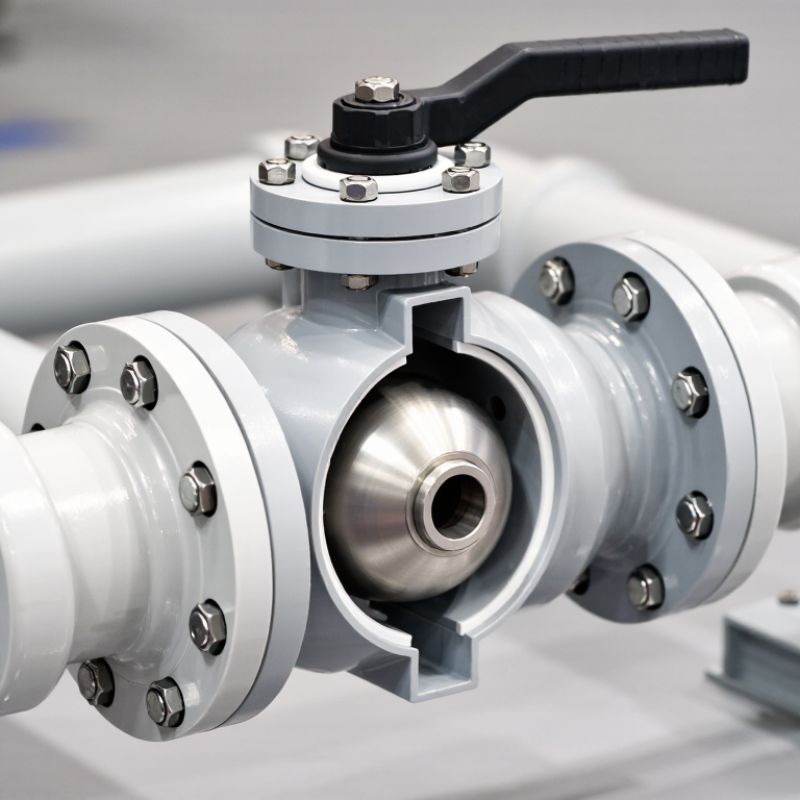
A 6-inch PVC ball valve is commonly identified as DN150. However, DN150 describes the nominal connection size, not the exact internal diameter. AWWA C905 dimensional data shows that 6-inch PVC pressure pipe may use a 6.625-inch outside diameter, while wall thickness changes with the pressure class. The valve bore can therefore be smaller than the connected pipe.
Inside the valve, a drilled PVC ball rotates through 90 degrees. When the hole aligns with the pipe, water follows a nearly straight flow path. When the ball turns crosswise, the passage closes against the seats. Full-port designs reduce turbulence, but reduced-port designs may lower cost and increase local velocity. The label alone is not enough.
Flow should be checked using the valve’s certified flow coefficient, not nominal size alone. IEC 60534-2-1 uses the relationship Q = Cv√(ΔP/SG) for liquid sizing, with Q commonly expressed in gallons per minute. For water, SG is approximately 1. A larger Cv usually means less pressure loss at the same flow, though fittings, pipe length, and temperature still matter. ISO 16138:2018 also addresses thermoplastic valve construction and performance requirements. In practice, I would verify the pressure-temperature chart and actual bore before selection. PVC becomes less pressure-resistant as temperature rises. That detail is easy to miss.
A 6 PVC ball valve usually means a nominal six-inch thermoplastic valve. The number describes connection size, not always the exact internal diameter. Its PVC-U body provides rigidity, low weight, and strong resistance to many corrosive liquids.
PVC-U contains no plasticizer, so it stays harder than flexible PVC. It can still become brittle under impact or extreme cold. That detail matters during transport and winter installation.
The sealing package defines performance. EPDM is commonly selected for water, diluted acids, and alkaline service. It is not suitable for every hydrocarbon or solvent. PTFE seats offer low friction and broad chemical resistance, but they can deform under excessive pressure or heat.
The ball rotates inside these seats, opening the passage when aligned with the pipe. A quarter-turn closes it. Simple operation.
ISO 16135 covers thermoplastic ball-valve design, functional requirements, and testing. It does not approve every valve for every chemical or pressure condition. Temperature derating, seat material, joint method, and cycle testing still require verification.
PlasticsEurope reported 400.3 million tonnes of global plastics production in 2022. That figure shows material scale, not automatic sustainability.
A practical mistake is trusting the valve body alone. Check the stem seals, gasket compatibility, pressure chart, and actual medium. The specification may look complete, yet one overlooked seal can control the entire service life.
A 6-inch PVC ball valve controls water or other compatible fluids in large piping systems. Its internal ball contains a round opening, called a bore. When the handle turns 90 degrees, the ball rotates inside the valve body. The bore lines up with the pipe, allowing flow through the valve. Turn the handle another quarter turn, and the solid side blocks the passage. Flow stops quickly.
The movement is simple, but installation still demands care. The stem must rotate smoothly without excessive force. A handle parallel to the pipe usually indicates an open valve. Perpendicular usually means closed. This visual check helps operators respond quickly during maintenance. However, position markings can become unclear over time. Never rely on appearance alone when pressure remains in the line. Confirm the system condition before removing any connection.
Tips: Check the pipe size, fluid compatibility, pressure rating, and temperature range before installation. Support heavy six-inch piping so the valve does not carry unwanted stress. Open and close the valve slowly when operating a pressurized system. Avoid using extra tools on the handle. That force may damage the stem or sealing surfaces. Clean pipe ends carefully, because grit can scratch internal seals and cause a small but persistent leak.
What Is a 6 PVC Ball Valve and How Does It Work?
A 6-inch PVC ball valve controls flow with a drilled sphere inside its body. Turn the handle 90 degrees, and the opening aligns with the pipe. Turn it again, and the solid side blocks the passage. This design offers quick shutoff, low flow resistance, and simple visual operation.
Pressure ratings need careful attention. At 23°C, many industrial PVC valves show their highest rated pressure, often listed on technical data sheets. A rating such as 150 psi does not apply automatically to every 6-inch valve. Wall thickness, connection type, seal material, and manufacturing standards can change the result. Check the pressure rating for the complete valve assembly, not only the pipe.
Temperature changes the calculation. Around 60°C, PVC reaches its upper service range, and pressure capacity can fall sharply. Some data sheets require significant derating at this temperature. A valve rated for 150 psi at 23°C may allow far less pressure at 60°C. Do not estimate the reduction by guesswork. That shortcut can create a weak point.
Water temperature matters.
Continuous heat exposure can also affect seals and joint strength. Inspect the valve body, unions, and solvent-welded connections before installation. A pressure test with cold water may not represent hot-service behavior. The safest selection uses the manufacturer’s temperature-pressure chart, system pressure, and actual operating temperature together.
A 6-inch PVC ball valve, often called DN150, controls flow through a quarter-turn sphere. Its connection method matters as much as the valve body. The U.S. EPA’s seventh Drinking Water Infrastructure Needs Survey estimates $625 billion in drinking-water investment over 20 years. Reliable joints therefore deserve careful attention, especially on large-diameter lines.
Solvent-weld connections use a socket and chemically softened pipe surfaces. The installer cuts the pipe square, removes burrs, cleans both surfaces, and applies compatible cement evenly. Alignment must remain steady during curing. A dry fit can look perfect but still hide poor insertion depth. Threaded DN150 adapters simplify removal, yet excessive tightening may split PVC fittings. Use compatible thread sealant, avoid metal tools for final force, and check the manufacturer’s pressure rating. This connection suits equipment that may need occasional servicing.
Flanged options use a gasket, bolts, and matching flange faces. They are useful near pumps, strainers, and rigid equipment because technicians can separate the joint without cutting pipe. Tighten bolts gradually in a cross pattern. Uneven compression can create a slow leak. ASME B16.5 bolt patterns are not automatically interchangeable with every plastic flange standard, so verify drilling, gasket dimensions, and pressure class. The valve’s DN150 label may also conceal different outside diameters. Measure the pipe before ordering. Small assumptions cause expensive rework.
It usually means a DN150 nominal connection size. It does not guarantee a six-inch internal bore. The label can mislead.
A drilled PVC ball rotates 90 degrees inside the valve body. The opening aligns with the pipe when fully open. A crosswise position closes the passage.
No. Connected pipe dimensions and wall thickness can vary by pressure class. The valve bore may be smaller than the pipe opening.
A full-port valve offers a straighter flow path and usually less turbulence. A reduced-port valve may cost less but create higher local velocity.
Use the valve’s certified flow coefficient, commonly called Cv. A larger Cv usually means lower pressure loss at the same water flow.
EPDM suits many water, diluted acid, and alkaline applications. PTFE offers low friction and broad chemical resistance. Neither material suits every liquid.
PVC becomes less pressure-resistant as temperature rises. Check the pressure-temperature chart before installation. This detail is easy to miss.
Verify the actual bore, pressure rating, temperature limits, seals, gasket compatibility, and joining method. Check the actual liquid, not only the valve body.
PVC can become brittle during extreme cold or rough transport. Protect the valve from impact and inspect it before winter installation.
No. Compatibility depends on the liquid, concentration, temperature, seals, and pressure. The specification may look complete, yet one seal can decide service life.
A 6 Pvc Ball Valve is a DN150 (6-inch) flow-control device designed for moving and isolating liquids in piping systems. Its body is commonly made from PVC-U, while EPDM or PTFE may be used for sealing components, depending on chemical compatibility and operating conditions. Within the scope of ISO 16135, the valve uses a spherical ball with a central passage. Turning the stem 90 degrees aligns the passage with the pipeline to allow flow or turns it across the pipe to block flow.
When selecting this valve, users should review pressure ratings specified at 23°C and account for the reduced service capability of PVC at elevated temperatures, with 60°C generally treated as an upper service limit. DN150 connection options include solvent-weld joints, threaded ends, and flanged configurations. The appropriate connection depends on installation requirements, maintenance access, system pressure, and compatibility with the surrounding pipework.

EHAO